 When I witness someone discovering Richard Armitage, I’m always interested. Part of that is wondering how RA is evolving in the public’s eyes, and part of it is to be selfishly assured that what hit me like a two by four was not merely an appeal to insanity. Yes, I’m looking for validation. LOL! And I was never more sure I wasn’t crazy to have this four year reaction than when I read the tongue-in-cheek account of another person’s experience at the ending of ‘North and South.’ Humorous as it was, I saw something more and wanted to know exactly what it was. Plus, I’m intensely curious about almost everything as some of you know. Sometimes that gets me in over my head, but this time I had a very pleasant encounter with Heidi Russell, who is fun loving and definitely an ENFJ. :D

Me: Obviously, you had a visceral reaction to the ending of ‘North and South,’ and I love what you wrote about the characters and plot in your piece on Melanie’s Musings. But I guess I’m challenging you about what exactly ignited that kind of explosion since there are countless movies with similar plots: two strong characters who overcome trials and their own prejudice to find love. So why this one and not those others? Yeah, peel the onion.
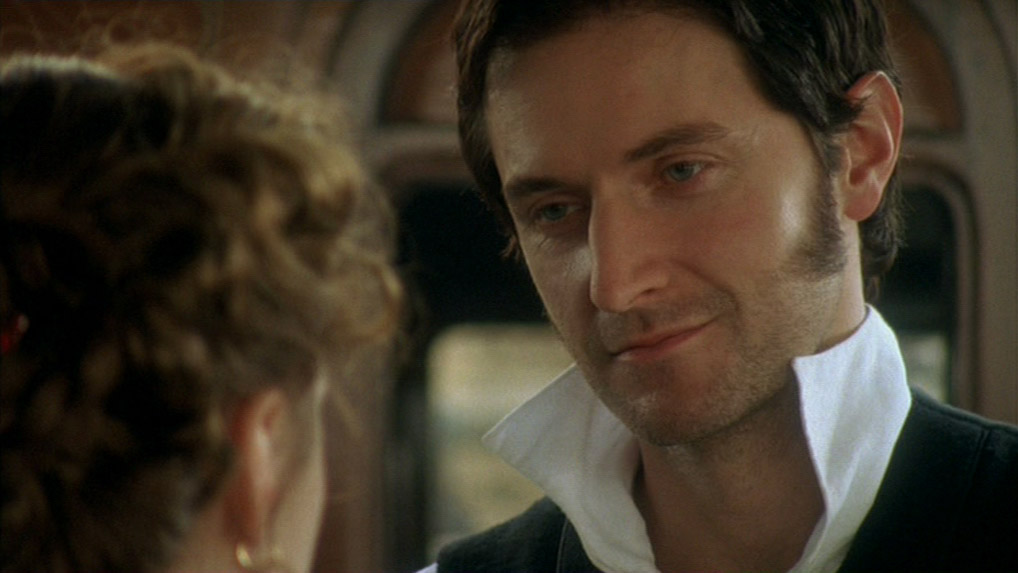
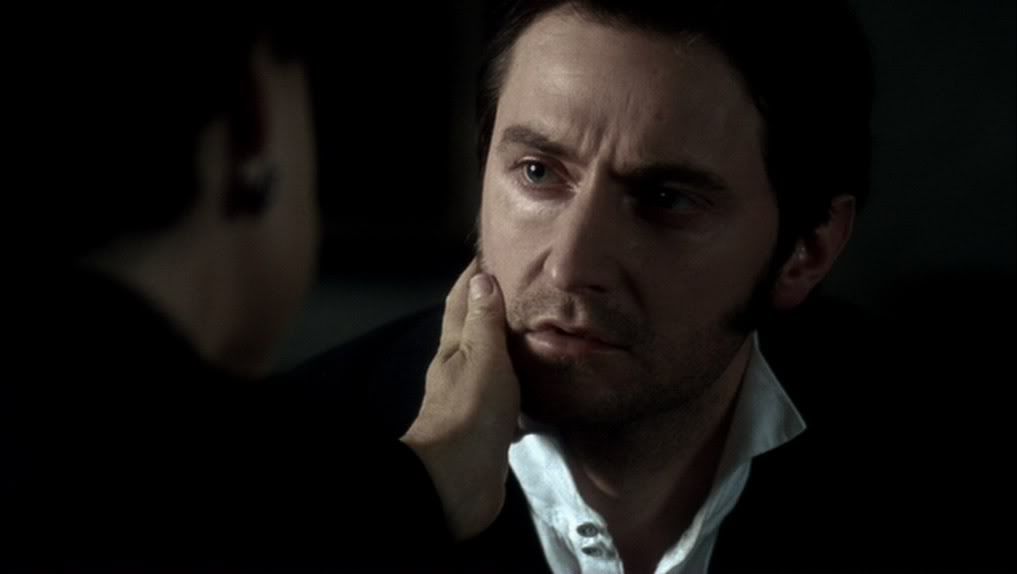
Heidi: When I was 15, I read “Gone With the Wind” five times. And every time I read the ending, I cried my eyes out. Since then, ironically, I’ve stayed away from romance novels with sad endings. One author in particular that I avoid like the plague is Nicholas Sparks, for this very reason. They’re just too painful for me. I literally carve my heart out if I read stories like that. Recently, though, I reluctantly watched the “North & South” movie at someone’s suggestion. They knew I was a huge Jane Austen fan and thought I’d love it. As I started watching it, I had the same reaction to it as I did with “Gone With the Wind.” These two characters seemed like they were never going to make it. I turned off the movie half-way and vowed I would not watch the end. I was certain that it would come to nothing good. But then curiosity got the better of me, and five days later, I decided to see it through. During the last scene, I was mesmerized in disbelief that Margaret and John actually were brought together. It seemed to me that the storyline had been set up to prevent this at all costs.
I think the reason this scene struck a chord was two-fold. One is very personal, in that during the past two years, I’ve been going through a bitter divorce, and it took this long to settle it. I encountered North & South at a time when a sad chapter of my life was closing down. Those of us who are book lovers — and movie lovers — can relate to how a storyline might speak to us personally, and we can get engrossed in it because at some deeper level, it helps us work out the rough edges of our emotional lives. I liken it to dreaming.
The second reason the scene affected me was of course the superb acting skills of Richard Armitage. Here was a character that, in my opinion, loved someone in spite of the fact that he knew it was unrequited throughout the entire story. Armitage’s facial expressions and mannerisms all conveyed those of someone who would cherish this woman, even if she told him to go to hell. When he perceived that her feelings towards him were the same, it was as if I was watching a flower blossom. Few actors can pull off this emotional type of transition. What is Armitage’s X factor? Is it the eyes, hooded under those eyebrows? Is it the strong masculine profile? Is it the fact that he towers over his female counterparts, symbolically representing the protection we like to feel from a man we love? Is it his raspy baritone voice or Northern English accent? In this case, I don’t think it’s any one thing — and it’s not necessarily a physical aspect, either.

There are plenty of handsome actors on screen these days. No — Armitage conveys a gentle humbleness, the type of strong vulnerability that allows us as women to say, “He would protect us while needing our protection.” And as someone who has experienced a divorce recently, this idea resonates with me more strongly than anything else. He conveyed the type of man who would put a woman on equal footing with him and look up to her, while also sheltering her.
Me: So well put! And I have to ask have you ever been up close to a, er, fandom before? If so, was it anything like this? Was it pleasant?
Heidi: No, truthfully, I’ve never really grown attached to an actor’s career like I have Richard Armitage’s. And especially in such a short span of time! I’ve had my favorites, of course … in my early 20s it was Tom Cruise because of Top Gun (dating myself here), and in my late 20s, Kevin Costner because of Dances with Wolves. I didn’t really latch on to any other favorite until this time last year as I was working towards my divorce … and that was Jake Gyllenhaal. But all of those were just extremely superficial, in the sense that they were “pretty boys” who lit up the screen for whatever reason. Until now, I really haven’t seen an actor that intrigued me intellectually until I encountered Richard Armitage. That’s saying something, because I’m hyper critical of actors.
Me: So where are you now with this Richard Armitage thing?
Heidi: For about two weeks, I was, for lack of a better phrase, “in love” with the fictional character of John Thornton. (Pathetic, isn’t it, but we all of have been there, so I know no one is judging me for saying it.) Then after I wrote the guest blog about how the train scene in North & South had affected me, I got to thinking, “There’s something to that actor.” And I started pinging around the Web, only to discover he was quite the name across the Pond. With each show I see him in, whether it’s a comedy like “Vicar of Dibley” or a drama like “Spooks” (“MI-5” for us Americans), it’s like the onion is getting peeled back. This guy always has something new to give to each part. It’s not like watching a Brad Pitt movie where you think, “Oh, there’s a cowboy Brad Pitt. Oh, there’s a space alien Brad Pitt.” (I don’t think he played either, but you know what I mean.) You think, “Oh, that’s a sweet accountant who is romancing that vicar,” or, “Oh, there’s a tormented spy with Stockholm Syndrome who was imprisoned and tortured and is a great patriot.” You don’t think, “There’s Richard Armitage.”
Later:
Heidi: I do think that, like I said earlier, movies bear a resemblance to working out our emotions similar to dreaming, and fascination with movie stars is also symbolic and can be personally revealing if analyzed. It’s been a good exercise for me, answering these questions. In a way, very self-therapeutic and good to analyze the reason behind an emotional celebrity connection at this juncture in life.”
One self-analytical thing I discovered after I looked over the answers to your questions … this sort of floored me about myself, but it just hit me … You asked about the other fandom periods, and I listed the Tom Cruise thing in my early 20s, the Kevin Costner thing late 20s … then I said nothing until last year with Jake Gyllenhaal … then discovered Armitage. It’s very symbolic. Early 20s = superficiality. Late 20s, I was still single but more in thinking mode, more grounded, which is why the Costner connection with the film about Native Americans makes sense. Then there’s nothing for 15 years with a movie star fascination. That’s because first I was knee deep into an intense career move; then had serious relationships, and then finally marriage. Jake Gyllenhaal emerged AFTER I got out of this bad marriage and was finding my re-grounding. But like Tom Cruise, he’s superficial. So a re-vert, in essence, to the early 20s mindset, when I was first getting out there. The Armitage factor … I gave myself 2 years of intense emotional healing and am at the end of the no-dating rule with men. Armitage represents the solid man that I’m finally ready for, and unlike the past, wouldn’t settle for another “sparkly man.” I can’t believe that progression. It just hit me full force when I re-read what I’d written to you. I was like, holy cow, this is deep.
Me: Yep, and therein lies a lot of the fascination with Richard Armitage. He has drawn together a lot of people who are as introspective as he is, and it makes for some fascinating discoveries. So welcome to the club. :D
Heidi in her new Thorton>Darcy shirt:

And like so many of us who have the desire to see RA in great roles, Heidi has a dream role or two.
Heidi:
I didn’t realize until this week that The Salvation Army is one of Richard Armitage’s favorite charities, and my parents were officers (pastors) in it. So score brownie points for RA. And I was just telling someone else that before I knew that, I was thinking he’d play an awesome William Booth, who founded it in the mid-1800s in London. The intensity from the North & South performance fits with Booth’s personality.
or
He would be perfect in a remake of the 1980 movie, “Somewhere in Time.” Put him in the role that Christopher Reeve played, and pair him with a classic beauty like Gemma Arterton (little known, but she’d be perfect. She played opposite Gyllenhaal in Prince of Persia).
Heidi Russell lives in Central Kentucky USA, and her day job is journalist. She is a former AP newswoman and currently freelances full-time for eight U.S. magazines. As a single mom, she spends her off hours going on imaginary adventures with her partner in crime, who she refers to as, “Munchkin” (her eight year old son).
If you would like to chat with her, you can find her at Twitter.
Photos of Heidi courtesy of Munchkin, who wields a mean camera.
Screencaps courtesy of both RichardArmitageCentral and RichardArmitageNet.Com.
April 17, 2012
Categories: Fandom, Interviews, North and South . Tags: fun, introspection, John Thornton, Richard Armitage, screencaps . Author: RAFrenzy . Comments: 13 Comments










 RAFrenzy